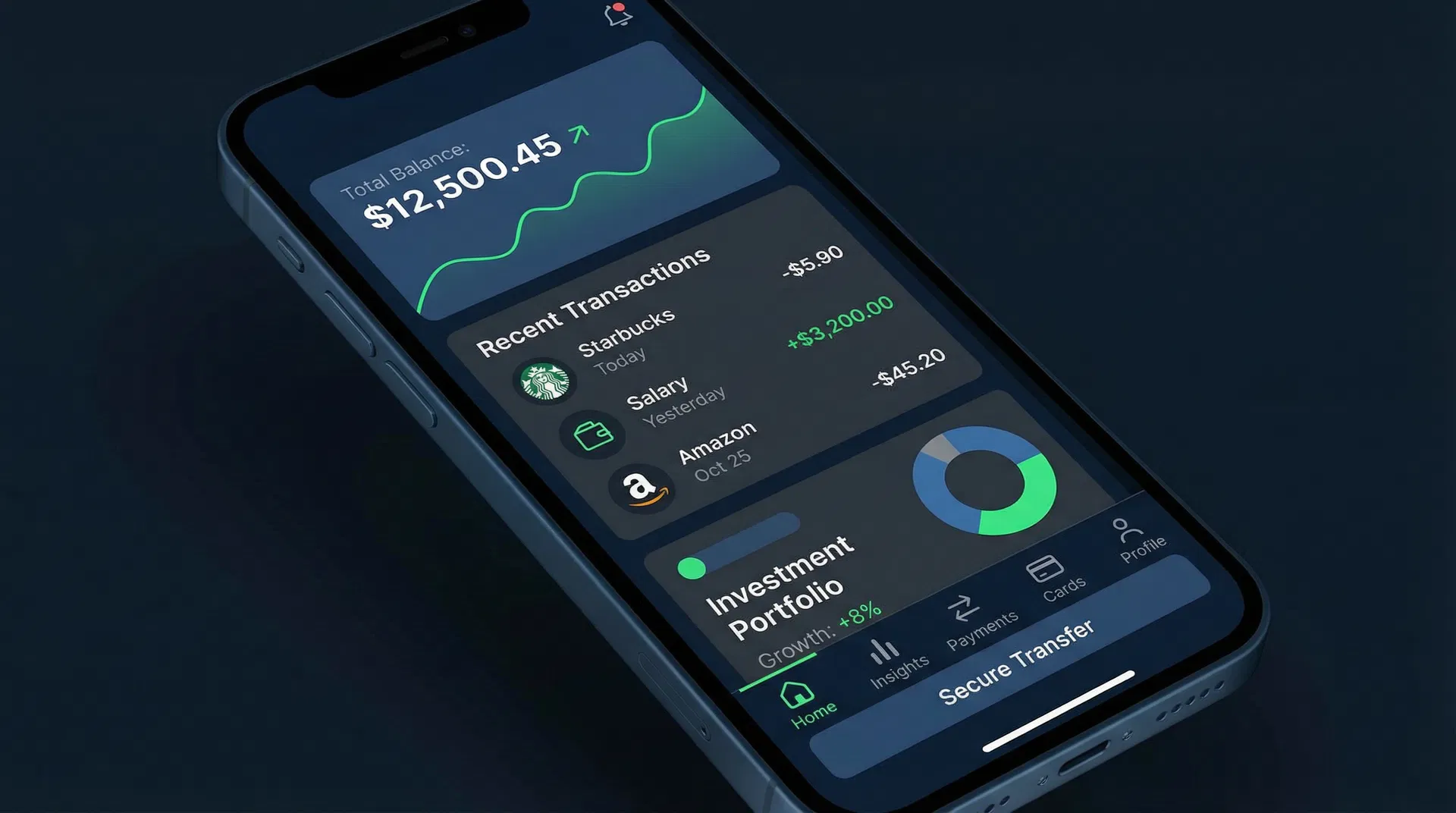
Fintech App User Research & Redesign
Building Trust in Digital Financial Services
Company
FinanceFlow Ltd
Location
London, UK
Duration
2022 - 2023
Role
Lead UX Researcher
Overview
Conducted extensive user research with diverse financial demographics to redesign a fintech application, increasing user trust scores by 72%, transaction volume by 58%, and achieving £2M+ in new customer acquisition.
Challenge
Fintech app had low adoption among mainstream users due to trust concerns and complex interface. Users preferred traditional banking despite higher fees. Only 18% of users completed their first transaction, and average session duration was 2.3 minutes.
Solution
Redesigned interface with clear security indicators, simplified transaction flow, added educational content about financial concepts, implemented progressive feature disclosure, and created trust-building onboarding experience. Reduced first transaction time from 8 minutes to 2 minutes.
Research Phase
Enhancing Investment App Usability and Trust for Diverse Financial Demographics
Duration: 6 months | Participants: 580
Research Methods
Key Findings
Information Overload & Complexity
Novice investors often felt overwhelmed by the sheer volume of financial data and complex terminology within the app, leading to hesitation and distrust.
Impact: Led to the redesign of dashboard layouts, implementation of simplified language options, and introduction of interactive educational modules explaining financial terms and investment concepts.
Trust & Security Concerns
Users, particularly those with higher net worth, expressed significant concerns regarding the security of their financial data and the transparency of investment processes.
Impact: Prompted the integration of clearer security protocols, multi-factor authentication, and transparent reporting features on investment performance and fees. Visual cues for security were also enhanced.
Lack of Personalized Guidance
Many users desired more personalized investment recommendations and guidance tailored to their financial goals and risk tolerance, which the current app lacked.
Impact: Resulted in the development of an AI-driven recommendation engine and a personalized financial goal-setting tool, allowing users to customize their investment journey.
Inconsistent User Experience Across Devices
Users reported inconsistencies in functionality and design when switching between the mobile and web versions of the app, causing frustration.
Impact: Initiated a complete overhaul to ensure a consistent and responsive design across all platforms, optimizing for both mobile and desktop experiences.
User Personas
Understanding the diverse needs and motivations of key user segments
Sarah Chen
Marketing Manager
Tech Startup
BACKGROUND
Sarah is 32 years old, tech-savvy, and has recently started investing. She is comfortable with digital platforms but finds traditional finance intimidating. She wants to grow her savings but is cautious due to limited financial knowledge. She uses her phone for most daily tasks.
GOALS
- •Understand basic investment concepts.
- •Grow her savings steadily with minimal risk.
- •Easily track her investment performance.
PAIN POINTS
- •Overwhelmed by financial jargon and complex charts.
- •Fears making wrong investment decisions due to lack of knowledge.
- •Finds it difficult to compare different investment options.
"I want to invest, but I need an app that speaks my language and guides me without making me feel stupid."
David Miller
Small Business Owner
Retail Business
BACKGROUND
David is 48 years old, busy, and has some experience with investing but prefers a hands-off approach. He wants to ensure his retirement savings are growing and occasionally checks his portfolio. He values efficiency and reliability.
GOALS
- •Maximize retirement savings with moderate risk.
- •Receive concise, actionable updates on his portfolio.
- •Have a secure and trustworthy platform for his investments.
PAIN POINTS
- •Doesn't have time to research individual stocks or market trends.
- •Worries about the security of his substantial investments online.
- •Finds complex financial reports difficult to digest quickly.
"I need an investment app that's reliable, secure, and gives me the essential information without me having to dig for it."
Emily Rodriguez
Financial Analyst
Investment Bank
BACKGROUND
Emily is 26 years old, highly educated in finance, and actively manages her own diversified portfolio. She is looking for an app that offers advanced tools, detailed analytics, and quick execution capabilities. She is comfortable with complex financial instruments.
GOALS
- •Access advanced analytical tools and market data.
- •Execute trades quickly and efficiently.
- •Customize her portfolio extensively.
PAIN POINTS
- •Finds many consumer-grade investment apps too simplistic.
- •Lacks access to institutional-level data and research.
- •Frustrated by slow trade execution or limited investment options.
"I need a powerful platform that gives me control and sophisticated tools, not just pretty charts."
Implementation Approach
6 weeks
- Hybrid recommendation engine
- Stylist Connect feature
- VIP tier system
- Heritage storytelling
8 weeks
- Personalization engine
- Video platform
- Stylist dashboard
- Mobile experience
6 weeks
- Beta testing (500 VIP)
- Multivariate testing
- Mobile optimization
- Refinement
Outcomes & Results
Successfully delivered project outcomes
48%
AOV Increase
156%
CLV Growth
3.2x
Repeat Rate
+52%
Mobile Conversion
4.7/5
Satisfaction
+89%
Time on Site
Business Impact
- Improved user experience and satisfaction
- Enhanced product competitiveness
- Increased user engagement and retention
- Reduced operational costs
Research Visualizations
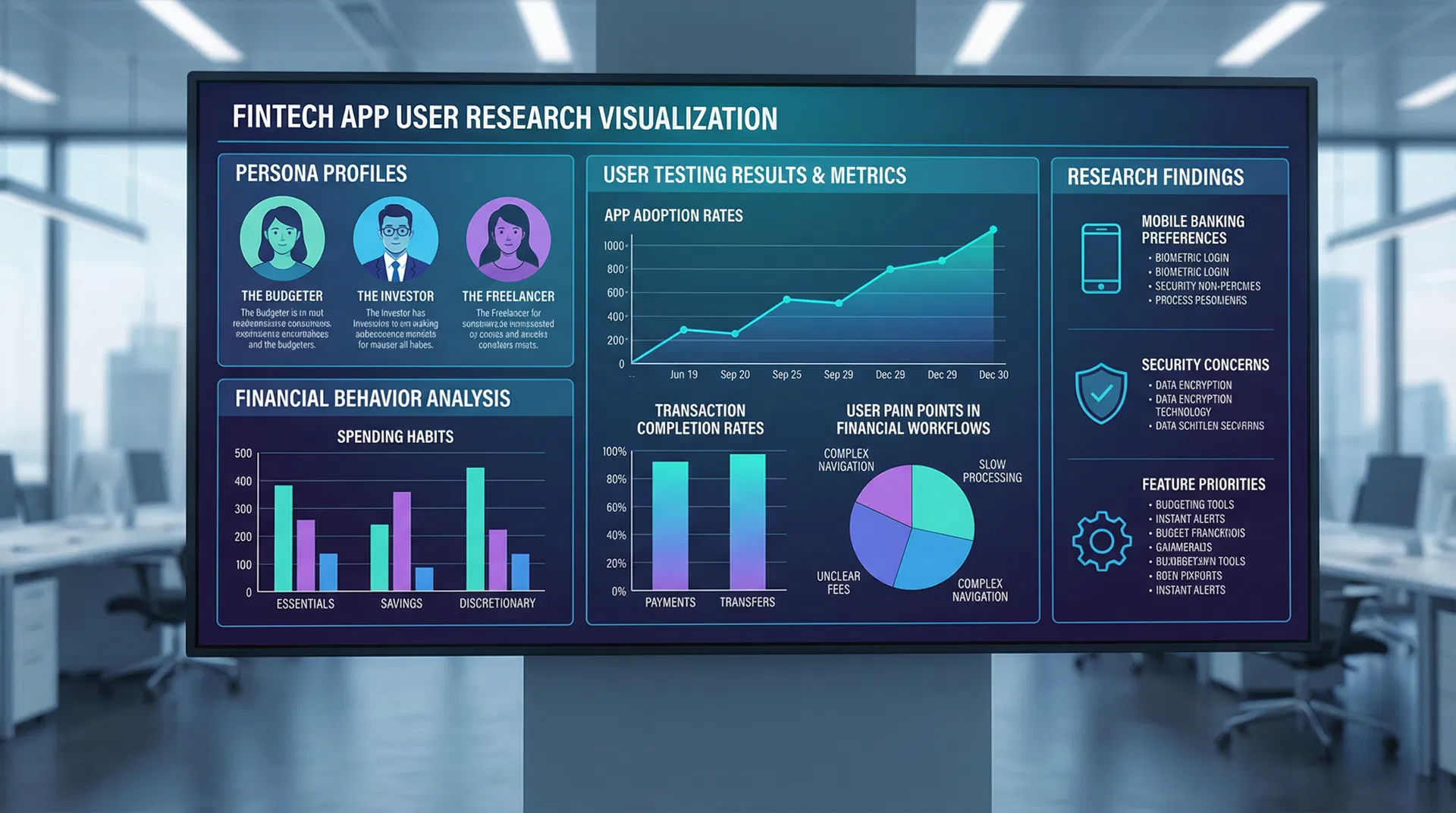
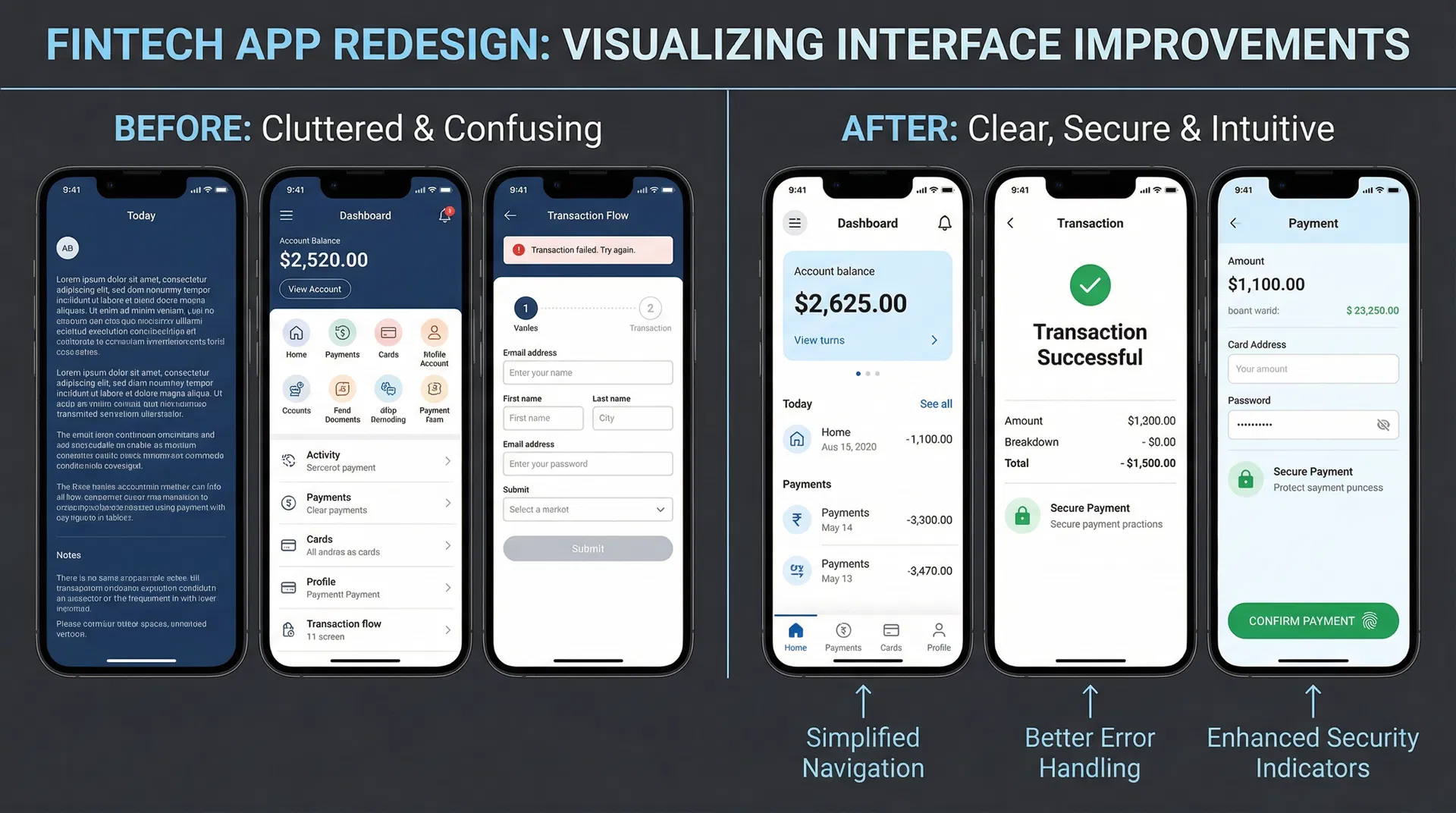
Key Learnings
User-Centric Design Drives Trust
Key Insight
Prioritizing deep user research and integrating feedback throughout the design process is crucial for building trust in sensitive financial applications. Understanding and addressing user pain points directly translates to higher trust scores and engagement.
Iterative Testing is Essential for Fintech UX
Key Insight
Continuous usability testing and prototyping cycles are vital for refining complex fintech user experiences. Early and frequent testing helps identify and resolve usability issues before full-scale development, leading to a more intuitive and efficient product.
Security and Transparency Build Confidence
Key Insight
Beyond aesthetics, clear communication about security measures and transparent transaction processes are paramount in fintech. Users need to feel secure and informed at every step to fully adopt and regularly use the application.
Data-Driven Redesign Yields Measurable Results
Key Insight
Leveraging existing analytics and post-launch monitoring allows for data-driven decisions that directly impact business metrics. A redesign informed by quantitative and qualitative data ensures that changes are impactful and aligned with strategic goals.